The reason why every product price on this site ends with the digit 9 is not what you might think.
In general, setting prices like $99 instead of $100 is a common marketing technique that takes advantage of consumer psychology—people tend to perceive $99 as significantly cheaper, even though the real difference is only $1. It creates an illusion of getting a better deal simply because the number doesn’t roll over to the next hundred.
However, this site does not use the number 9 for that reason.
Let me begin by explaining the meaning behind the name “sampei1089,” which is also the name of this site.
“Sampei” is taken from the protagonist of an old Japanese fishing manga—an iconic classic known by virtually every fishing enthusiast in Japan, regardless of generation. His name is written in kanji as 「三平」. The first character 「三」 means “three,” and 「平」 carries meanings such as “flat,” “level,” or “peace.” I’ve even seen people translate it into “3 PIECES.” If you shorten it even further, you could call it “3P”—though that abbreviation means something very different in English, so let’s just leave it at that. (laugh)
My personal lucky number is actually “2,” though saying that right now may ruin the flow of this story—but anyway, I really like the number “3.” And I also like the number “9.” In Japan, “9” is considered a lucky number, and this originates from a gambling game called Oicho-Kabu. The word “kabu” derives from the Portuguese word cabo, meaning “the end” or “the tip.”
The number “9” is fascinating.
In the Japanese multiplication table (kuku), if you add the tens digit and the ones digit of any product involving 9, the sum always becomes 9. It has a mysterious charm—yet it’s not a prime number, since it can be divided by 3. And since 9 is 3 squared, you could even say that 3 is both the “mother” and the “father” of 9.
So, what about “6,” the number that is not a square but simply double of 3? Does it have any charm? Absolutely—it sits right between “3” and “9,” and if we continue with the gambling theme, it serves as one of the key tiles forming the 3-6-9 suji in Japanese mahjong. There was a period in my life when I was completely obsessed with mahjong.
My oldest hobby—one I’ve had since childhood—is fishing. Specifically, I target the Japanese herabuna (Carassius cuvieri).
The word “herabuna” can be written in kanji as 「平鮒」 or 「篦鮒」. As explained earlier, 「平」 means “flat/level,” and 「篦」 refers to a flat, elongated tool made of metal or similar materials. Their underlying nuances are not very different.
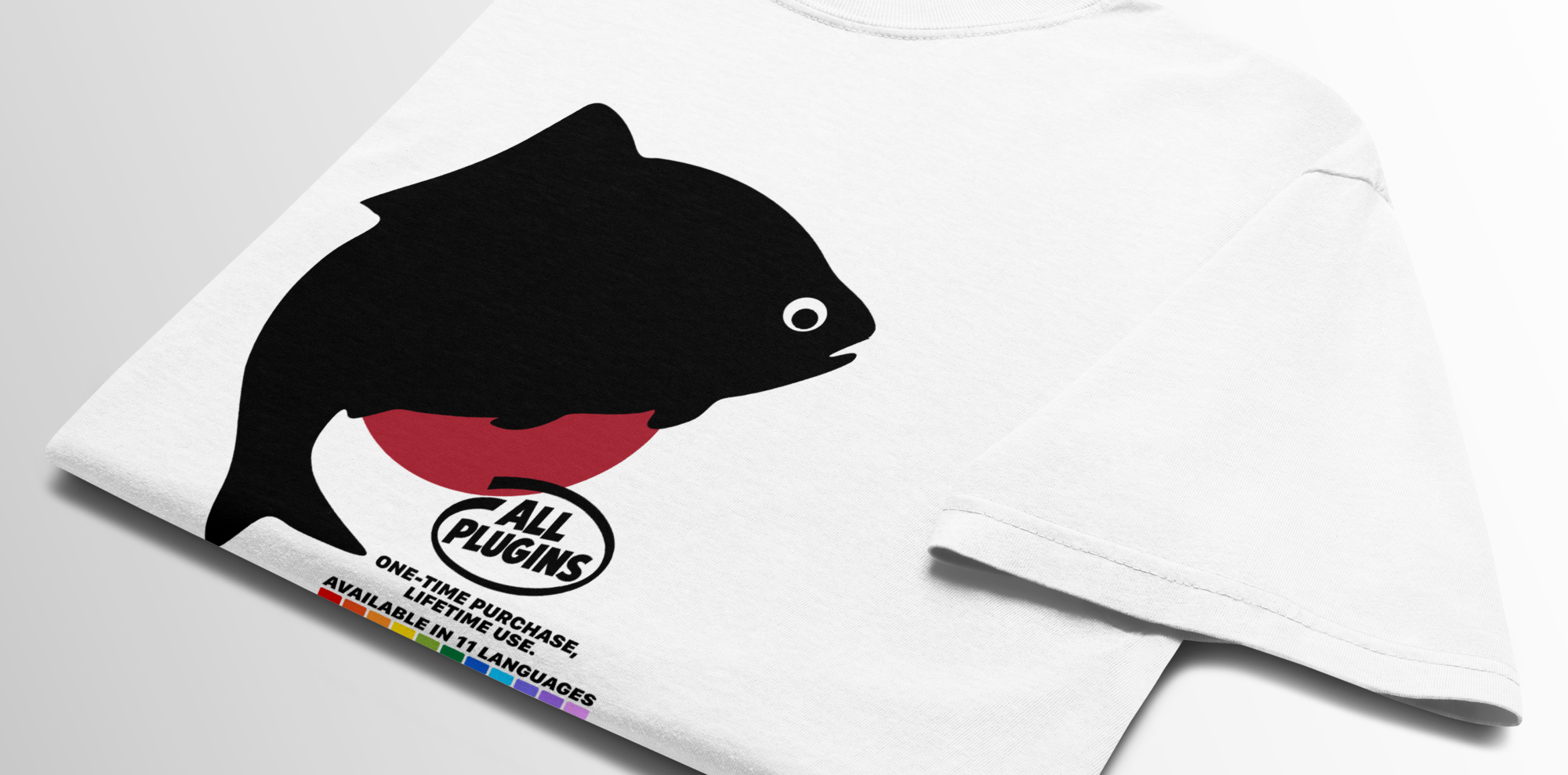
The logo of this site is a herabuna, and the reason why the inner tags of the original printed T-shirts we sell feature three herabuna fish is simple: sampei consists of three 「平」 (“hei/flat”) characters.
Now, what does “1089” mean?
This comes from a type of wordplay common in Japanese called goro-awase. Many languages have similar forms of linguistic play, but Japanese often assigns alternative meanings to numbers based on their phonetic readings.
- “1” is read “ichi,” which can yield the sounds “i.”
- “0” is read “rei,” which gives “re.”
- “8” is read “hachi,” which can shift to the sound “ha,” and in a softened form, “pa.”
- “9” is read “ku,” unchanged.
Thus, 1089 can be read as i-re-pa-ku → irepaku.
If we convert irepaku back into Japanese words, we get 「入れパク」 (ire-paku).
This is a fishing term. It refers to a situation where each time you cast your line, fish immediately come to “bite.”
In older times, the typical term was 「入れ食い」 (ire-kui = 1091), literally “continuous bites,” but since “eating” (食う=ku-u) evokes the imagery of the mouth opening and closing, it was replaced by the onomatopoeia pakupaku, meaning “munch-munch.” The result became 「入れパク」 (i-re-pa-ku = 1089).
My life has always been intertwined with puns, wordplay, and parody.
However, despite all that, I had somehow never noticed until today that 1089 is actually a multiple of 9.
Unbelievable!
1089 is 9 × 121, and also 99 × 11 (9 × 11 × 11).
The joy of this discovery inspired me to write this article.
What on earth was that? (laugh)
A small detour—maybe an accidental payoff?:
It seems that the number 11 has been quietly essential all along. While only some of the plugins on this site currently support 11 languages, all of them are being developed with that goal in mind. I didn’t force the number—after careful consideration, eleven simply felt right. Still, when I customized my Quicktags and realized the default number of buttons was also eleven, I honestly shivered a little.
The front design of my original printed T-shirts also features a line about supporting 11 languages. Unlike the website, where I line up 11 national flags, the T-shirt uses eleven rounded color blocks instead. Partly because wearing “a row of world flags” on your chest feels a bit strange, and partly because the fish silhouette already sits on top of a red circle—basically a nod to the Japanese flag. And, to be honest, I simply like rainbows. The design became a compromise between “multi-language flags” and the colorful tone of the site’s top page.
And then there’s the Quicktags. Since there are 11 buttons, I realized I could decorate them using the exact same 11-color palette as the T-shirt. That felt both hilarious and oddly satisfying. I eventually kept the colors only for the hover state because the full palette looked overwhelming… but still, the shock and joy of being able to reuse the exact same colors just days after finalizing the T-shirt design was unforgettable.
You might be thinking, “I have no idea what this person is talking about,” and honestly, I wouldn’t blame you. (laugh)
Another perspective.
The number “1” is written in kanji as 「一」. If you place two of them together—「一一」—it becomes 「二」, which literally means two.
11 = 一一 = 二 = 2
So in the end, it seems my true lucky number really is “2,”
even if I happen to like 3 and 9 as well.
Postscript:
The manga artist who created the series featuring “Sampei” was originally a bank employee. He even created a manga whose title directly references the accounting technique of checking mismatched numbers by “dividing them by 9.” Also, “Sampei” has the same given name and surname—both written as 「三平」. In one of his works dealing with competitive herabuna fishing, the protagonist naturally wore a bib with the number 33.
I truly believe he was the manga creator most enchanted by the magic of the numbers 3 and 9.
どうでもいい話ですが
当サイトの商品価格の下一桁が、必ず9で終わっているのには理由があります。一般的にこれは、「$100より$99のほうが安く感じる」という消費者心理を利用するために用いられる手法ですね。桁が繰り上がらないギリギリの数字ということで、実際の$1という価格差以上のお得感を感じる錯覚です。しかし当サイトでは、そんな理由で9にしているわけではありません。
ここでまず、当サイトの名前である「sampei1089」の意味について説明しましょう。sampeiは、古い日本の釣り漫画の主人公からとったもので、日本の釣り好きなら、世代を超えて知らぬ者はいない名作です。主人公の名は、漢字で「三平」と書きます。「三」=3、「平」=平面、平和という意味になりますので、「3PEACE」と訳しているものを見たことはあります(平和って数えられるんかい?)。もっと略せば3Pですが(笑)。
私が自分のラッキナンバーだと信じているのは、実は「2」なのですが、というこの先の話をぶち壊しそうな前置きはさておき、「3」という数字は好きです。で、「9」も好きなんです。日本で「9」は縁起の良い数字とされますが、これは「オイチョカブ」というギャンブルから来ています。「カブ」はポルトガル語で「末端」を意味する「cabo」に由来しています。
「9」という数字は面白いですよね。掛け算九九の10の位と1の位を足すと、必ず9になります。不思議な魅力を持つ数字なのですが、3で割れるので素数でも何でもないわけです。9は3の二乗ですから、3は9の母であり父であるとも言えます。
では、二乗ではなく2倍の数字である「6」に魅力はないでしょうか。いいえ、「6」には「3」と「9」の中間となり、さきほどのギャンブル繋がりで言えば、日本式麻雀における「3-6-9のスジ」を構成する重要な役割があります。私は一時期どっぷりと麻雀にハマっていました。
幼少の頃からやっている、私のもっとも古い趣味は魚釣りです。しかも「ヘラブナ=the Japanese Herabuna (Carassius cuvieri)」を専門に狙います。この「ヘラブナ」は、漢字で書くと「平鮒」または「篦鮒」になります。「平」は先ほど説明した意味ですが、「篦」は金属等を細長く「平ら」にした道具を指しますので、両者に大きな意味の差はないと言えるでしょう。当サイトのロゴはヘラブナですし、販売しているオリジナルプリントTシャツの内側タグに3匹のヘラブナが描かれている理由は、sampei=3つの「平」だからです。
では「1089」は何でしょうか。これは、日本語の「語呂合わせ」という遊びです。各言語にそういう遊びはあると思いますが、日本では、数字の読みを他の言葉に当てるということをします。
「1」は「いち(ichi)」と読むことから、「い(i)」、「0」は「れい(rei)」と読むことから「れ(re)」、「8」は「はち(hachi)」と読むことから「は(ha)」の音便で「ぱ(pa)」、「9」は「く(ku)」と読むのでそのまま。
つまり1089=irepakuと読めます。irepakuを日本語へ再変換すると、「入れパク」となります。これは釣り用語で、仕掛けを「投げ-入れ(i-re)る=cast」度に、魚が「食い(ku-i)=bite」に来る様を指します。古来は「入れ食い(i-re-ku-i=1091)」と表現していましたが、「食う(ku-u)」様が転じて「口を閉じ開き」する様を表すオノマトペである「パクパク(pakupaku)」に置き換わり、「入れパク(i-re-pa-ku=1089)」となったのです。
私の人生は、常に語呂合わせ、ダジャレと共にありました。パロディも大好きです。しかしながら、1089が9の倍数であることに、今日まで気づいていませんでした。なんということでしょう!
1089は、9の121倍、99の11倍(9の11倍の11倍)です。
この発見があまりに嬉しく、この記事を書いた次第です。
なんのこっちゃ(笑)。
蛇足(伏線回収?):
どうやら、「11」という数字もキモらしいと。当サイトのプラグインは全て、11言語対応にしてあります。厳選した結果の11であって、「11ありき」ではなかったのですが、カスタムしたQuicktagsのデフォルトのボタンの数が11だったときには震えましたね。
オリジナルプリントTシャツのフロントデザインでは、11言語対応のコピーが書かれていますが、サイトのように11の国旗を並べたデザインではなく、11色の角丸を並べて表現しているんですね。これは、「万国旗を着て歩くのはどうなの?」「魚のバックは日の丸(日本国旗)だしな」という思いもありましたし、単純に「レインボー好きという私の嗜好」、「サイトのトップページのカラフルさと国旗の折衷案」という話もあります。
で、Quicktagsですよ。11ボタンあるのですから、Tシャツと同じ配色で装飾可能ということになるじゃないですか。あまりにクドいのでホバー色だけにとどめた次第ですが、Tシャツデザインからわずか数日後に同じ配色ができる喜びというか驚きというか。「ちょっと何を言ってるかわかんない」かもしれませんね(笑)。
別の視点。
「1」は漢字で「一」なのですが、「一」を2つ重ねた「二」は、そのまま「2」を意味します。
「11=一一=二=2」
なんだ、やはり私のラッキーナンバーは「2」のようです。3や9が好きであっても。
追記:
「三平」が登場する漫画の作者は、元銀行員でした。合わない数字を「9で割る」手法で調査することを、そのままタイトルにした漫画も著作にあります。また、「三平」はファーストネームもラストネームも同じ「三平」であり、ヘラブナ釣りトーナメントを扱った作品では、当然のように「33」のゼッケンをつけていました。
漫画家史上、最も3と9の魅力に取り憑かれた作者だと思います。